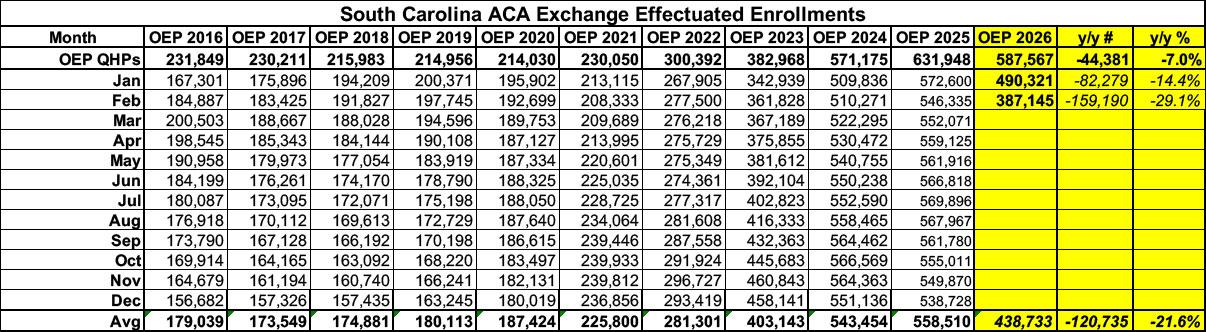
ACA exchange enrollment has dropped by nearly 30% in South Carolina since Congressional Republicans allowed the enhanced federal subsidies to expire at the end of last year.
Initial signups during Open Enrollment were only down 7% vs. OEP 2025...but effectuated enrollment plummeted by 14% in January and a whopping 29.1% as of February vs. a year earlier.
That's nearly 160,000 South Carolina residents who lost coverage in just the first two months of the year...a number which has likely continued to climb since then.
The chart below contains proposed rates for Plan Year 2027, which will be reviewed for compliance with federal and state requirements. Please submit any comments to DOI.HealthRateReview@illinois.gov by Friday, July 10, 2026.
Initial signups during Open Enrollment were only down 0.8% vs. OEP 2025...but effectuated enrollment was 4.4% lower year over year in January, gradually rising to 11.4% lower as of April, according to Get Covered NJ, the state ACA exchange.
That's over 56,000 Kansans who already lost coverage in just the first four months of the year...a number which has likely continued to climb since then.
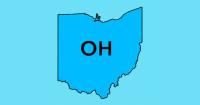
ACA exchange enrollment has dropped by 32% in Ohio since Congressional Republicans allowed the enhanced federal subsidies to expire at the end of last year.
Initial signups during Open Enrollment were down nearly 20% vs. OEP 2025...but effectuated enrollment dropped further, by 23% year over year in January and by over 32% in February.
That's over 160,000 Ohioans who already lost coverage in just the first two months of the year...a number which has likely continued to climb since then.
Trump Administration Delivers Second Year of Savings by Stopping Taxpayer Payments for Duplicate and Deceased Enrollees in Obamacare
WASHINGTON—October 14, 2026—The Centers for Medicare & Medicaid Services (CMS), a division of the U.S Department of Health and Human Services (HHS), continue to crush fraud, waste, and abuse in America’s healthcare programs by stopping duplicative enrollment in government health programs, with the potential to save taxpayers approximately $1.5 billion annually.
At a press conference today in Washington, D.C., Secretary Kennedy announced that in 2026, CMS identified 189,000 people with subsidized Obamacare coverage through the Federal Marketplace with duplicate Medicare, Medicaid or Children’s Health Insurance Program (CHIP) coverage, or who were deceased — and took swift action to remove Obamacare subsidies for these people to save taxpayer dollars.
ACA exchangeenrollment has dropped by 7.8% in North Dakota since Congressional Republicans allowed the enhanced federal subsidies to expire at the end of 2025.
Initial signups during Open Enrollment were down 4.4% vs. OEP 2025...but effectuated enrollment was 5.7% lower year over year in January and down 7.8% as of February.
Here's what this looks like visually, with both 2025 and 2019 (the last pre-COVID year, which didn't include the enhanced subsidies) included for comparison:
The Trump administration’s announcement earlier today around Affordable Care Act enrollees does not currently affect Washington state. The focus of this effort involves enrollees who are part of the federal marketplace, rather than state-based marketplaces like Washington Health Benefit Exchange.
Strong program integrity has been and remains a goal of the Exchange; where ongoing public trust and the responsible stewardship of taxpayer dollars are part of our success. We take these efforts very seriously and continue to act quickly if any issues arise. There is no evidence that there are issues with brokers or enrollees in Washington state, as highlighted in the federal marketplace. The Exchange has proven processes in place to identify broker conduct issues and continually seeks to strengthen safeguards around broker access and consumer authorization, effectively reducing risk for Washington consumers.
Colorado Health Insurance Shoppers Get an Early Look at 2027 Plans and Prices
Connect for Health Colorado’s Estimate & Explore tool is now available with new plan year information; customers can begin enrolling on Nov. 1.
COLORADO – Colorado’s official health insurance marketplace is giving customers an early look at 2027 health insurance plans, offering more time for people to compare coverage and costs before the annual open enrollment period begins.
Connect for Health Colorado’s Estimate & Explore tool offers personalized recommendations and side-by-side plan comparisons to help customers understand their coverage options. Customers can preview and compare 2027 plans now so they are prepared when open enrollment begins on Nov. 1.
COMPARE 2027 HEALTH PLANS AND PRICES ON MARYLANDHEALTHCONNECTION.GOV
Marylanders can now preview 2027 health plans and prices on MarylandHealthConnection.gov, the state’s official health insurance marketplace where Marylanders can shop and enroll in health insurance, as well as determine eligibility for Medicaid and other assistance programs. Use the Get an Estimate tool to compare health plans and savings.
Maryland Health Insurance Open Enrollment for 2027
Maryland’s 2027 health insurance open enrollment period runs from Nov. 1, 2026 through Jan. 15, 2027. During open enrollment, Marylanders can sign up for a plan from well-known insurance carriers like CareFirst, Kaiser Permanente, UnitedHealthcare, and Wellpoint Maryland, Inc. Vision and dental plans also are available.